Preventive pet care means protecting your pet’s health before problems become serious. It combines regular veterinary care with appropriate vaccination, parasite management, nutrition, weight and dental care, everyday observation and species-specific husbandry. The right plan depends on your pet’s species, age, health, lifestyle and where they live or travel, so preventive care should always be individual rather than based on a universal checklist.
During a routine health check, your veterinarian assesses your pet’s current health and looks for changes that may not yet be obvious at home. The appointment usually combines a discussion about your pet’s health, behaviour and lifestyle with a hands-on physical examination. Depending on the animal, the veterinarian may assess weight and body condition, eyes, mouth, skin, heart and breathing, abdomen, movement and other species-specific areas. They may also review nutrition, vaccinations, parasite prevention, dental or oral health and other preventive needs. Any additional tests or treatments should be recommended according to your individual pet rather than automatically performed at every appointment.
When your pet needs medical attention, your regular veterinarian is usually the first person you contact. From routine vaccinations to unexpected illnesses, general veterinarians manage a wide range of health concerns throughout an animal's life.
Organise your pet’s medical records by creating one profile for each animal and grouping information into clear categories such as veterinary visits, vaccinations, medications, test results, procedures and identification. Keep important original documents, maintain a simple chronological health timeline and update the record whenever your pet receives significant care.
Pet health records create a history of your pet's care. Keeping veterinary visits, vaccinations, medications, test results, allergies, identification details and other important information organised can make it easier to share accurate information with veterinary professionals and manage your pet's care throughout their life.
A digital pet passport is a digital profile that brings together important information about a pet, such as identity details, microchip information, vaccinations, medical history, medications, veterinary contacts, insurance and travel documents. It can make records easier to organise, update and share with trusted carers or professionals. However, the term “digital pet passport” is not the same as an official pet passport used for international travel. Travel requirements depend on the destination, species, country of residence and journey, and authorities may require specific original passports, health certificates or other official documentation. A digital record should therefore complement—not replace—legally required travel documents unless the relevant authority explicitly recognises it.
When changing veterinarians, ask your previous clinic to transfer your pet's medical records to the new practice before the first appointment. Important documents include medical history, vaccination records, medications, allergies, laboratory results, diagnostic images, surgical reports and specialist recommendations. Confirm that the new clinic has received everything and keep a personal copy where possible. Record-access rules, consent requirements and transfer procedures vary by country.
Living with more than one pet can be incredibly rewarding. Different personalities, familiar routines and the relationships animals develop with their guardians can make a household feel especially lively.
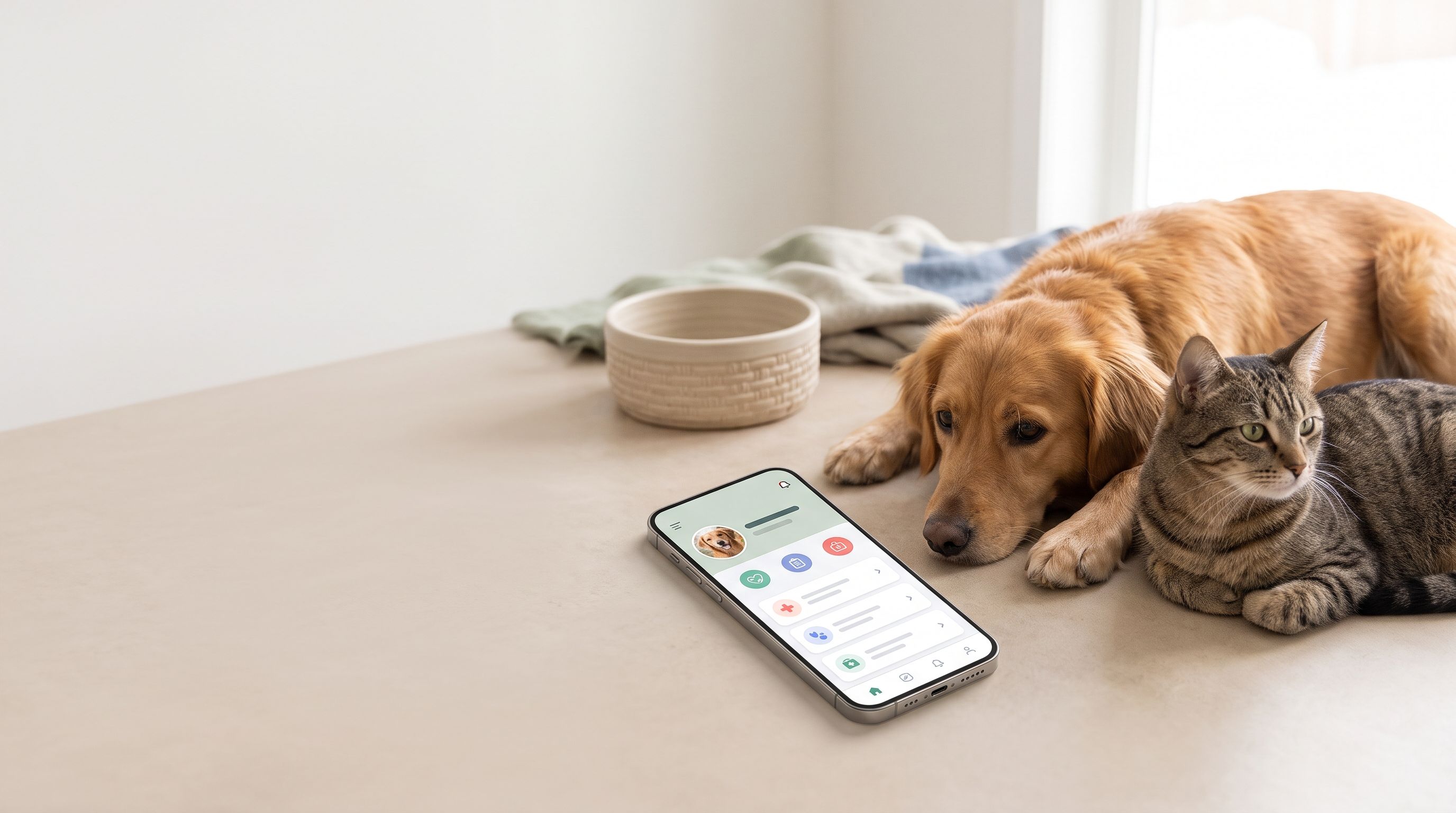
A genuinely all-in-one pet care app should do more than store reminders. It should give every pet an individual profile that connects health records, vaccinations, medications, appointments, everyday care, professionals, documents and shared family access. The strongest platforms should also make information easy to share, support multiple species, protect personal data and use AI as a support layer rather than a replacement for veterinary professionals.
Every pet has a history. It begins with the basics—who they are, when they joined the household and where they receive veterinary care—but grows to include vaccinations, medications, dietary needs, behaviour, appointments and countless small details that shape their wellbeing.
An AI pet assistant is a digital tool that uses artificial intelligence to help guardians organise and understand information about their pets and support everyday care. Depending on the system, it may answer pet-care questions, organise health records, explain veterinary information, identify patterns in information you record, manage reminders, help prepare for appointments and indicate when veterinary advice may be appropriate. AI can make pet care easier to navigate, but it cannot physically examine your pet, reliably diagnose every health problem or replace a veterinarian. The safest AI pet assistants are transparent about these limits, use species-specific and individual context, protect personal and pet data, and escalate appropriately when an animal may need professional care.