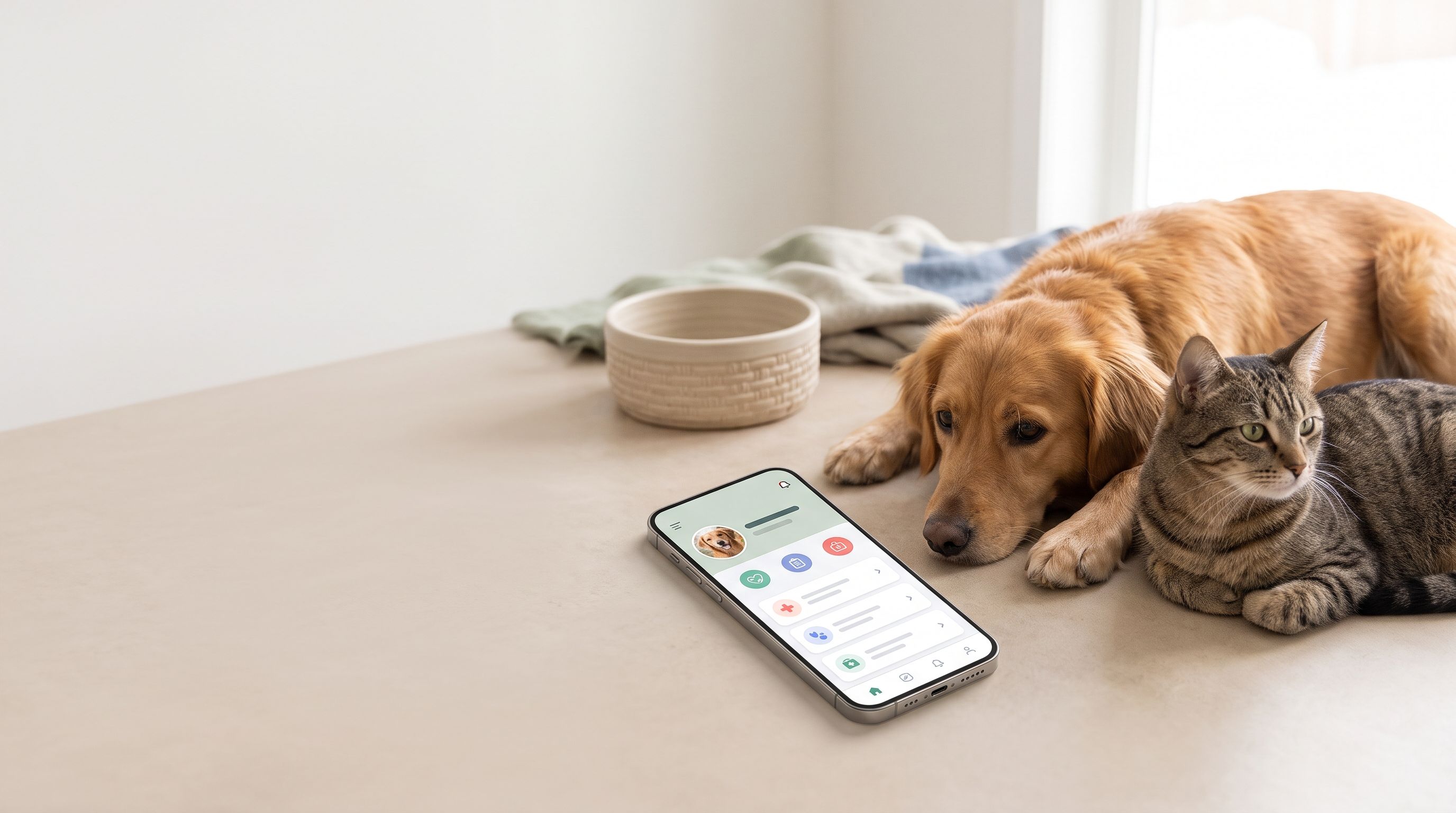
Every pet has a history. It begins with the basics—who they are, when they joined the household and where they receive veterinary care—but grows to include vaccinations, medications, dietary needs, behaviour, appointments and countless small details that shape their wellbeing.
An AI pet assistant is a digital tool that uses artificial intelligence to help guardians organise and understand information about their pets and support everyday care. Depending on the system, it may answer pet-care questions, organise health records, explain veterinary information, identify patterns in information you record, manage reminders, help prepare for appointments and indicate when veterinary advice may be appropriate. AI can make pet care easier to navigate, but it cannot physically examine your pet, reliably diagnose every health problem or replace a veterinarian. The safest AI pet assistants are transparent about these limits, use species-specific and individual context, protect personal and pet data, and escalate appropriately when an animal may need professional care.
Puppies need food specifically suitable for growth, because building bones, muscles, organs and other tissues requires a different nutritional balance from maintaining an adult body.